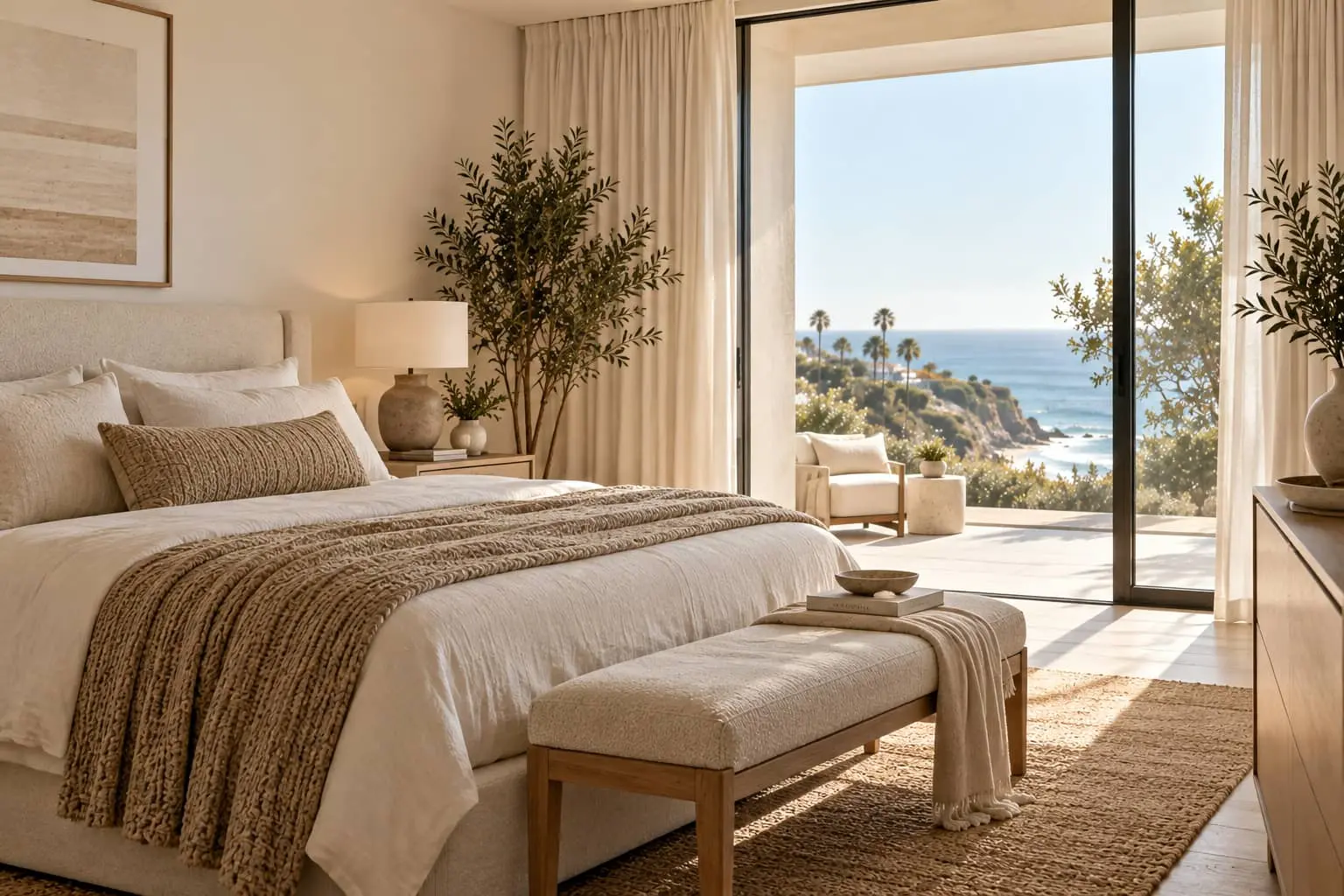
The rooms we return to most often are rarely the ones asking for our attention. They are the ones that allow us to settle in, exhale, and feel completely at home.
Creating that sense of quiet is not about removing personality or reducing a room to its bare essentials. It comes from making deliberate choices about what belongs, what matters, and what can be left alone. A beautiful room can still have warmth, texture, art, and objects collected over time. The difference is that each element has enough space to be appreciated.
For me, the most inviting interiors feel considered without feeling overly designed. There is a natural rhythm to them, where materials relate to one another, light moves easily through the room, and nothing feels as though it was added simply to fill an empty space.
Quiet begins with restraint
Restraint is often mistaken for minimalism, but they are not the same thing. Minimalism tends to focus on having less. Restraint is about knowing when a room has enough.
That might mean choosing one substantial piece of art rather than filling an entire wall. It could mean allowing the grain of natural wood or the movement in stone to provide the visual interest instead of introducing another pattern. Sometimes it simply means leaving a corner untouched.
A few principles I return to when creating quieter spaces:
- Choose materials with natural character. Wood, stone, linen, plaster, and other tactile materials bring depth without requiring decoration.
- Keep the palette connected. Colors do not need to match, but they should feel as though they belong in the same conversation.
- Give important pieces room. Furniture, artwork, and architectural details become more meaningful when they are not competing for attention.
- Let light participate. Natural light changes throughout the day and often provides more atmosphere than anything we could add ourselves.
- Edit slowly. A room does not need to be finished all at once. Living with a space often reveals what it actually needs.
A home should leave room for life
The goal is not to create a room that looks untouched. Quite the opposite.
A home should make room for books left on a table, a favorite chair pulled toward the window, flowers from the market, and the objects that accumulate through a life well lived. Those details are what keep restraint from becoming sterility.
The most successful quiet spaces create a foundation for those moments rather than competing with them. They provide structure without prescribing exactly how a room should be experienced.
Ultimately, quiet is less about an aesthetic than a feeling. It is the sense that everything has found its place, nothing is demanding unnecessary attention, and there is still enough room for the people who live there to make the space entirely their own.
Leave a Reply