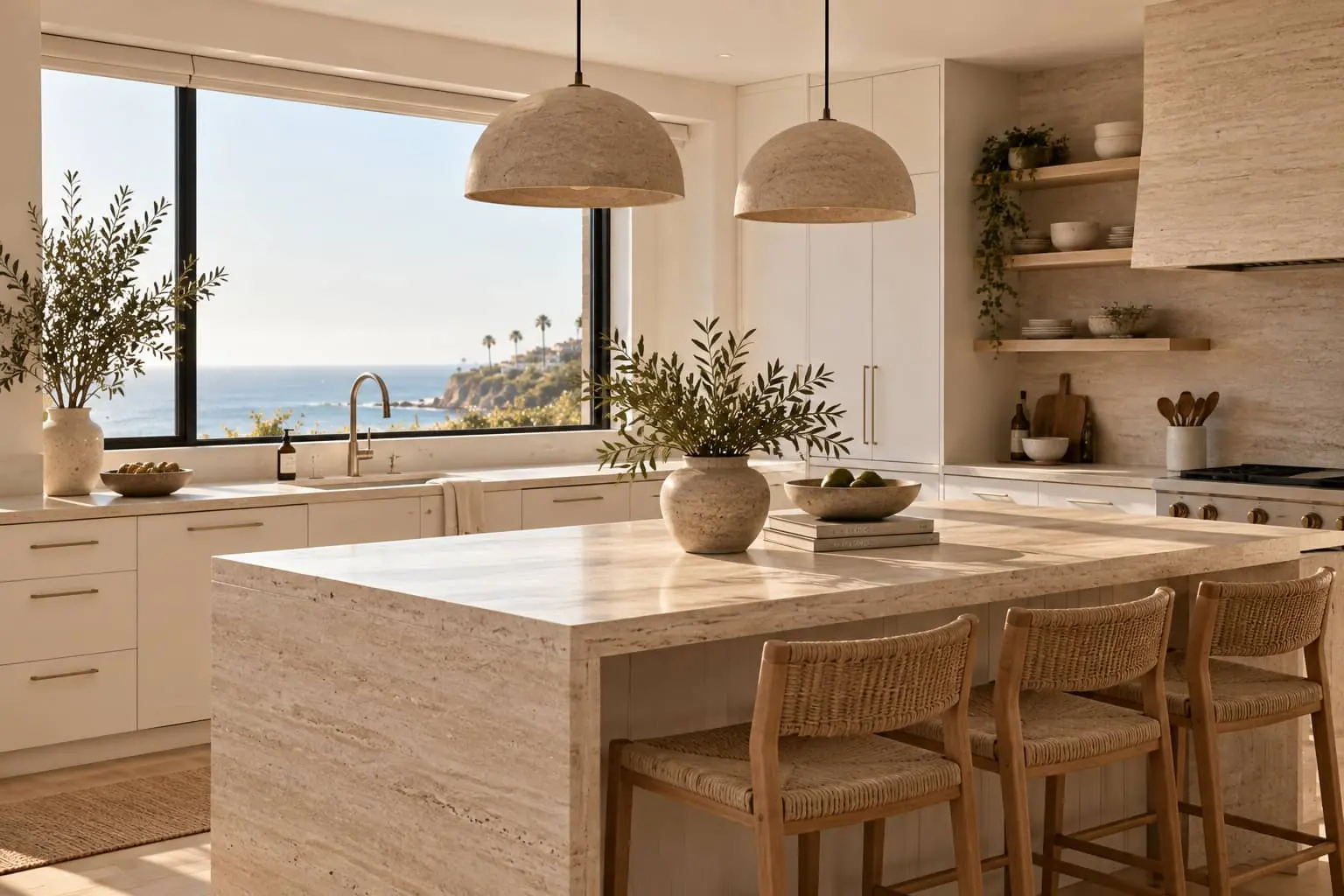
Natural light is one of the most important materials in a home, even though we cannot touch it. It changes how we experience color, creates shadow, and gives a room a different character from morning to evening.
I like to consider light early in the design process rather than treating it as something that simply happens once a room is finished. Where does the morning sun enter? Which spaces become warmer in the afternoon? Where does the light soften, and where can it become too intense? Understanding those patterns helps inform everything from furniture placement to material selection.
The goal is not necessarily to bring as much light into a room as possible. Some spaces benefit from brightness and openness, while others feel better with softer, more filtered light. What matters is working with the light a home already has.
Let the light guide the room
Windows naturally create focal points, particularly when they frame a landscape, garden, or ocean view. Rather than competing with them, the interior can be arranged to reinforce that relationship.
A seating area might orient toward the view instead of the television. A dining table can be positioned where afternoon light creates warmth without becoming uncomfortable. Even the placement of a favorite chair can transform an overlooked window into a place someone wants to spend time.
A few considerations can help natural light become part of the design:
- Study the room throughout the day. Morning and afternoon light can create completely different conditions within the same space.
- Choose materials in their actual environment. Stone, wood, paint, and textiles should be evaluated where they will live, not only under showroom lighting.
- Use window treatments selectively. Linen sheers can soften direct sunlight while preserving brightness and a connection to the outdoors.
- Consider reflection. Light-colored walls and natural surfaces can carry light deeper into a room without making it feel stark.
- Leave room for shadow. Contrast gives interiors depth. Not every corner needs to be equally bright.
Design for change
One of the qualities I love most about natural light is that it prevents a room from ever feeling completely static.
A wall that appears quiet in the morning may become the most expressive surface in the room at sunset. The texture of linen becomes more pronounced as light moves across it. Stone reveals subtle variations that disappear under artificial illumination.
Those changes give a home a sense of time and place. They connect the interior to the weather, the season, and the landscape beyond its walls.
Good lighting design supports that experience rather than replacing it. Lamps, sconces, and architectural lighting become most effective when they continue the atmosphere established during the day.
When natural light is treated as part of the composition from the beginning, a room does more than look beautiful in a photograph. It changes, responds, and feels alive throughout the day.
Leave a Reply