Reading Guide:
Intro | Approach | How It Builds | Designs | Who It’s For | Conclusion
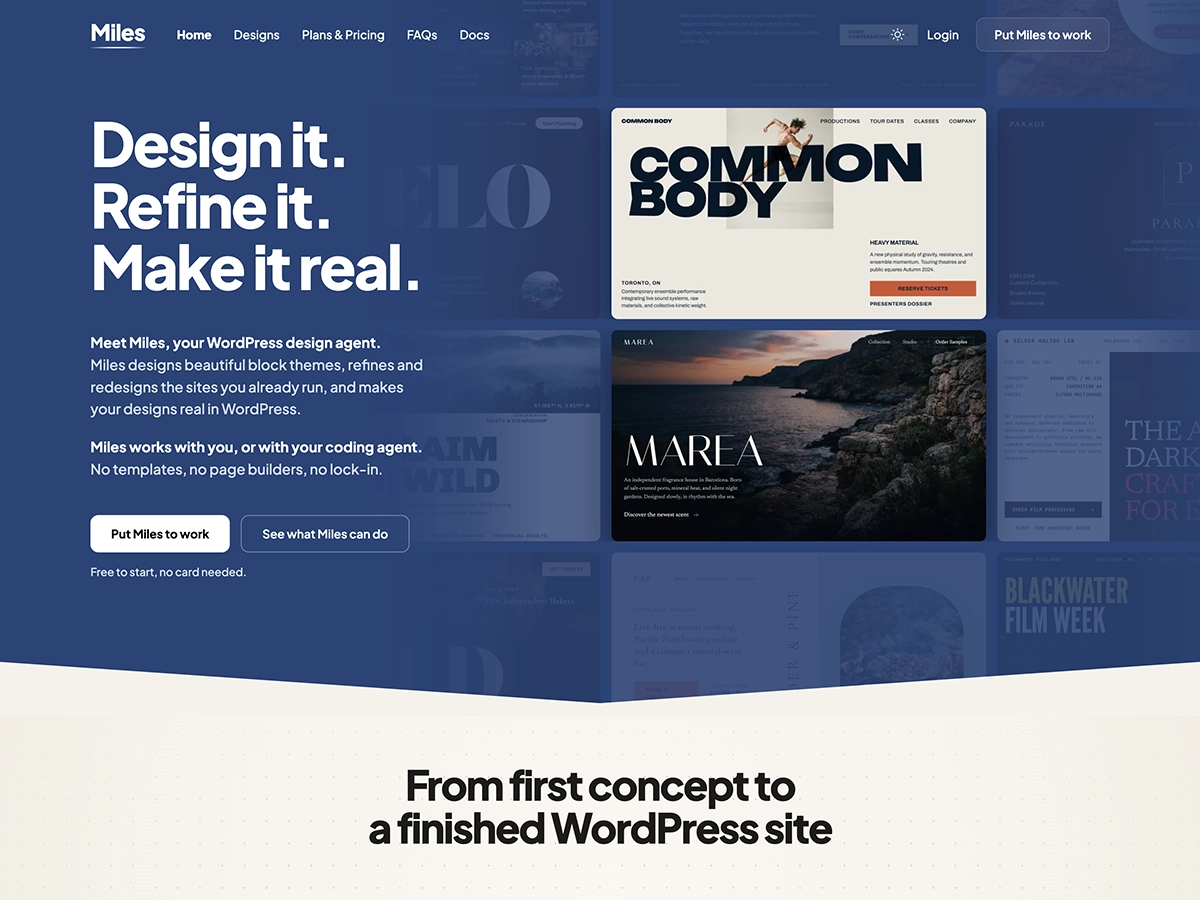
What to know about Miles
AI is quickly changing how websites are designed and built, but much of what I’ve seen still treats design as an output: write a prompt, generate a website, and hope the result is good enough.
That approach has never been particularly interesting to me.
Miles, an AI design agent for WordPress, comes from longtime WordPress developer Andy Peatling and caught my attention because it approaches the problem differently. Rather than simply generating a website, Miles helps you explore ideas, establish a visual direction, and bring it to life in WordPress.
For designers and developers, that distinction matters.
How Miles handles WordPress design
Miles begins well before the website starts to take shape.
You can start with an idea, a brief, an existing website, or visual inspiration. From there, Miles helps establish the project direction and generates designs that can be explored and refined before committing to implementation.
In practical terms, Miles can help throughout the design process:
- Turn an idea or brief into a website direction.
- Explore multiple visual concepts before building.
- Refine typography, color, layout, and imagery.
- Design new pages or sections for an existing website.
- Convert an approved direction into WordPress.
Perspective
AI can accelerate design, but taste determines what matters.
This feels much closer to an actual design process than the one-shot generation that has defined many AI website builders.
Design is rarely about producing the first acceptable answer. It is about exploring possibilities, recognizing what works, and thoughtfully refining a direction until it feels right and complete.
Miles accelerates that process without removing you from it. AI provides speed and range, but taste and judgment remain important inputs.
How Miles builds with WordPress
The other significant distinction is what happens after a clear design direction has been established and approved.
Miles builds for WordPress using native components, including:
- Blocks and block patterns.
- Global styles and theme settings.
- Pages and navigation.
- Images and other media.
- Reusable design elements.
That matters because the output remains recognizable, editable WordPress rather than a proprietary layer sitting on top of it.
For someone who has spent years working with themes, blocks, patterns, and design systems, this is important.
Key Idea
With AI, the value isn’t simply building websites faster. It’s discovering which ideas deserve to exist and having the creative freedom to explore them.
The value of AI should not come at the expense of ownership or introduce another dependency that becomes difficult to remove later. The best tools should extend the platform rather than replace it.
Miles feels aligned with that philosophy. AI becomes part of the process, while WordPress remains the foundation.
Explore AI-powered WordPress design with Miles →
Turning ideas into WordPress designs
This is where Miles becomes especially interesting to me.
Building a website has traditionally placed a meaningful cost between having an idea and experiencing it as something real. Even a relatively simple direction can require design, development, configuration, and enough time that many ideas never move beyond imagination.
AI dramatically reduces that cost, making it possible to explore, refine, and turn an idea into a working WordPress website much faster than before.
Sienna Vale began as one of those explorations.
Miles helped inspire the initial direction, which I continued to refine and develop into a complete Suede child theme. What started as an AI-assisted concept became something tangible, useful, and ultimately worth pursuing.
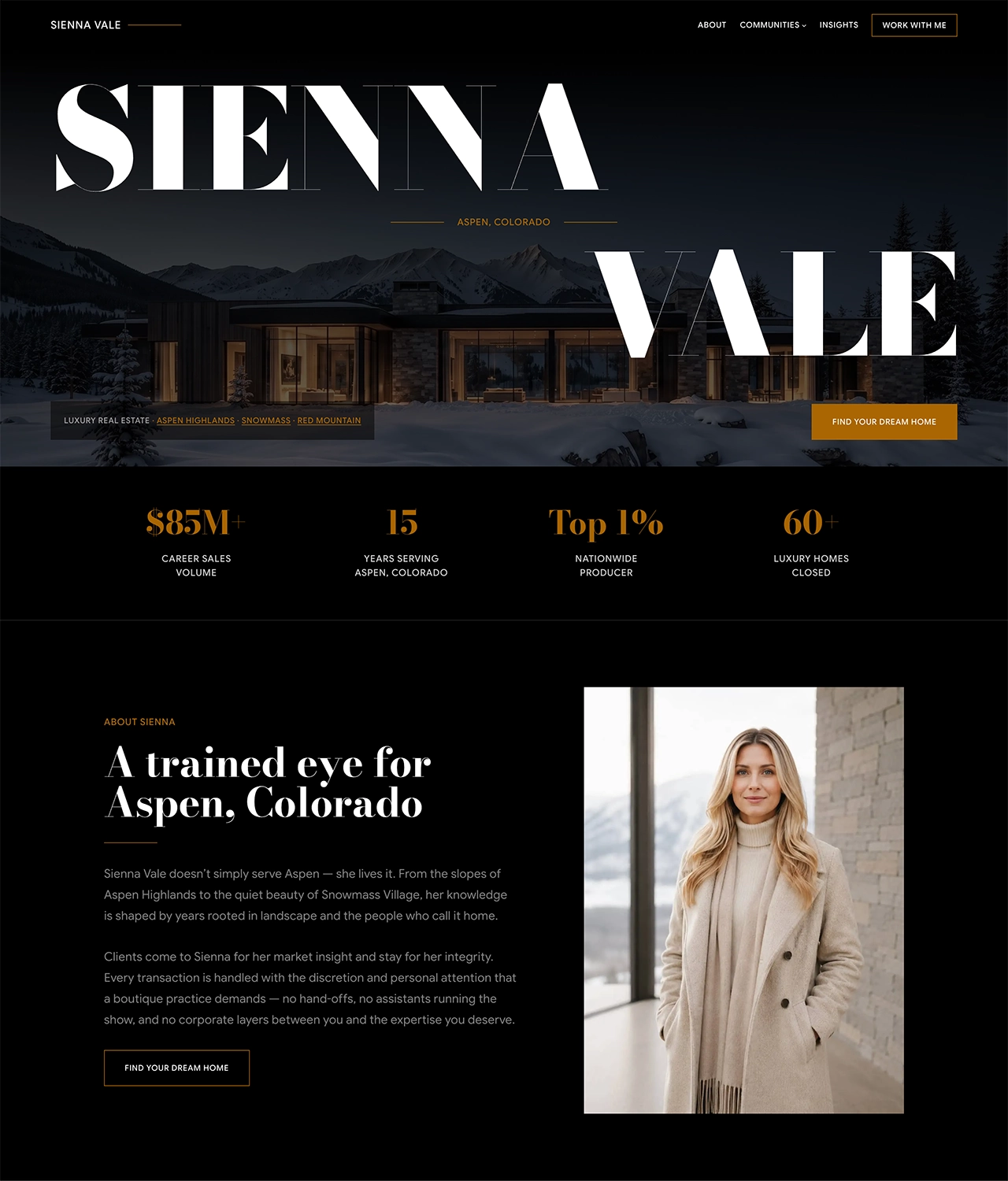
Explore Sienna Vale: View the demo · Browse themes
That changes which ideas are worth pursuing in the first place.
I can explore directions I might previously have dismissed because they did not justify the effort required to build them. Some will work. Others will not. But discovering that becomes considerably less expensive.
This is where I think AI can have an enormous impact on creative work.
The advantage is not that we need fewer ideas. It is that we can afford to explore more of the good ones and see where they lead.
Who Miles is for and where it fits
Miles can be useful across a broad range of WordPress users, but I think its greatest value is leverage.
- Designers can explore and implement ideas with less friction.
- Developers can begin with a stronger visual direction.
- Agencies can accelerate concept development and production.
- Site owners can build sophisticated WordPress websites without code.
But Miles does not eliminate the need for expertise.
Complex functionality, integrations, accessibility, SEO, content strategy, and the countless details that separate a functional website from an exceptional one still require attention. Generated copy should be reviewed. Design decisions should be questioned. The finished work still needs someone willing to exercise judgment.
Miles does not replace designers or developers. It gives them leverage.
A different WordPress workflow
The fact that AI can build a website is quickly becoming unremarkable.
What interests me is what happens when AI becomes part of the creative process: helping us explore directions, challenge assumptions, iterate faster, and shorten the distance between an idea and something we can experience.
Miles offers an intriguing glimpse of that future while remaining grounded in WordPress. Perhaps that is the most compelling thing about it.
The result doesn’t make me want to build more websites with AI. It makes me want to pursue more ideas and see where they lead.
Explore AI-powered WordPress design with Miles →
Disclaimer: This article contains referral links. If you purchase Miles through one of these links, I may earn a commission at no additional cost to you.